


External Shocks and the Coordination of Monetary and Macroprudential Policies in the Economies of the Pacific Alliance
By Zenón Quispe ; Donita Rodríguez ; Hiroshi Toma ; Cesar Vasquez
December 2017
Language: Spanish
Listen to the summary here
Captions region
...
00:00 / 00:00
Transcript
Keywords
- macroprudential
- monetary policy
- Pacific Alliance
JEL Classification
- F15
- F41
- F42
Abstract
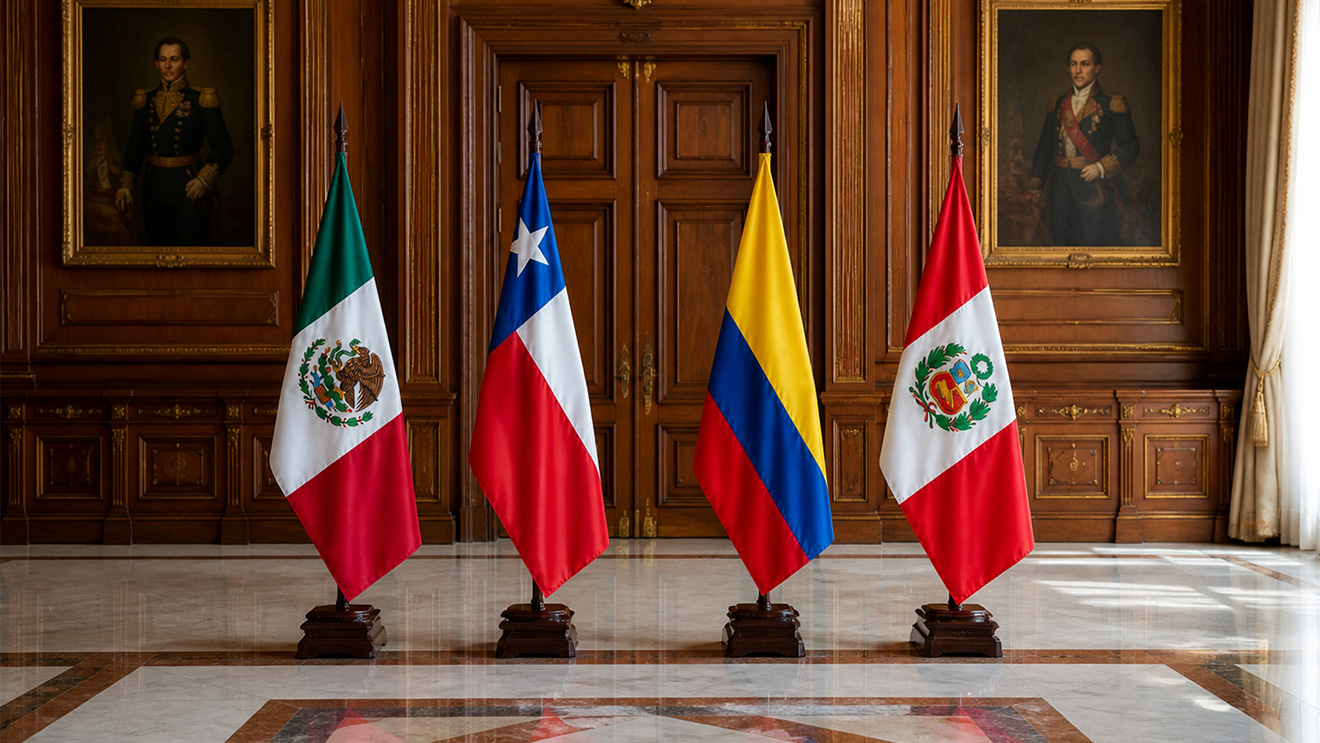
In recent times the Pacific Alliance member economies (Chile, Colombia, Mexico and Peru) have managed to achieve trade integration, have made an important progress in their financial integration and have withstood the spillovers from the global shocks risen from abroad. Notwithstanding, would the Pacific Alliance members be better off if they coordinated their monetary and macroprudential policy responses when facing the spillovers from these external global shocks? To test this we propose a framework based on the Global Projection Model (GPM) of the International Monetary Fund (IMF), which features real and financial linkages between countries. We introduce additional equations for terms of trade, commodities, portfolio inflows, foreign direct investment inflows, lending inflows, lending interest rates and macroprudential policy with the objective of having a more comprehensive model. We find that upon global shocks spillovers coming from China and the United States, the Pacific Alliance member economies are mostly better off when coordinating monetary and macroprudential policy responses than when not. (Audio: Department of Economic Publications)