Juan Carlos Aquino

Juan Carlos Aquino
Juan Carlos Aquino
Especialista en Investigación Económica

Estudios realizados

Bachiller en Ciencias Sociales

Pontificia Universidad Católica del Perú (Perú)
2005.

Maestría en Economía

Washington University in St. Louis (Estados Unidos)
2015.

Master en Economía

Universidad de San Andrés (Argentina)
2019.

Doctorado en Economía

Washington University in St. Louis (Estados Unidos)
2018.

Areas of interest

  • Mathematical Methods
  • Money and Interest Rates
  • Monetary Policy and Central Banking
  • Macroeconomic Policy and Public Finance
  • International Finance

Keywords

  • current account
  • DSGE models
  • endogenous liquidity
  • inflation
  • New-Keynesian Phillips curve

Perfiles académicos:

Juan Carlos Aquino holds a PhD in Economics from Washington University in St. Louis. His research areas include payment systems, valuation effects in the current account, inflation dynamics, and macroeconomic forecasting systems under a financial programming approach. He is also experienced in analyzing non-stationary time series and solving dynamic stochastic general equilibrium models.

Main Publications

The Small Open Economy New-Keynesian Phillips Curve: Specification, Structural Breaks and Robustness.

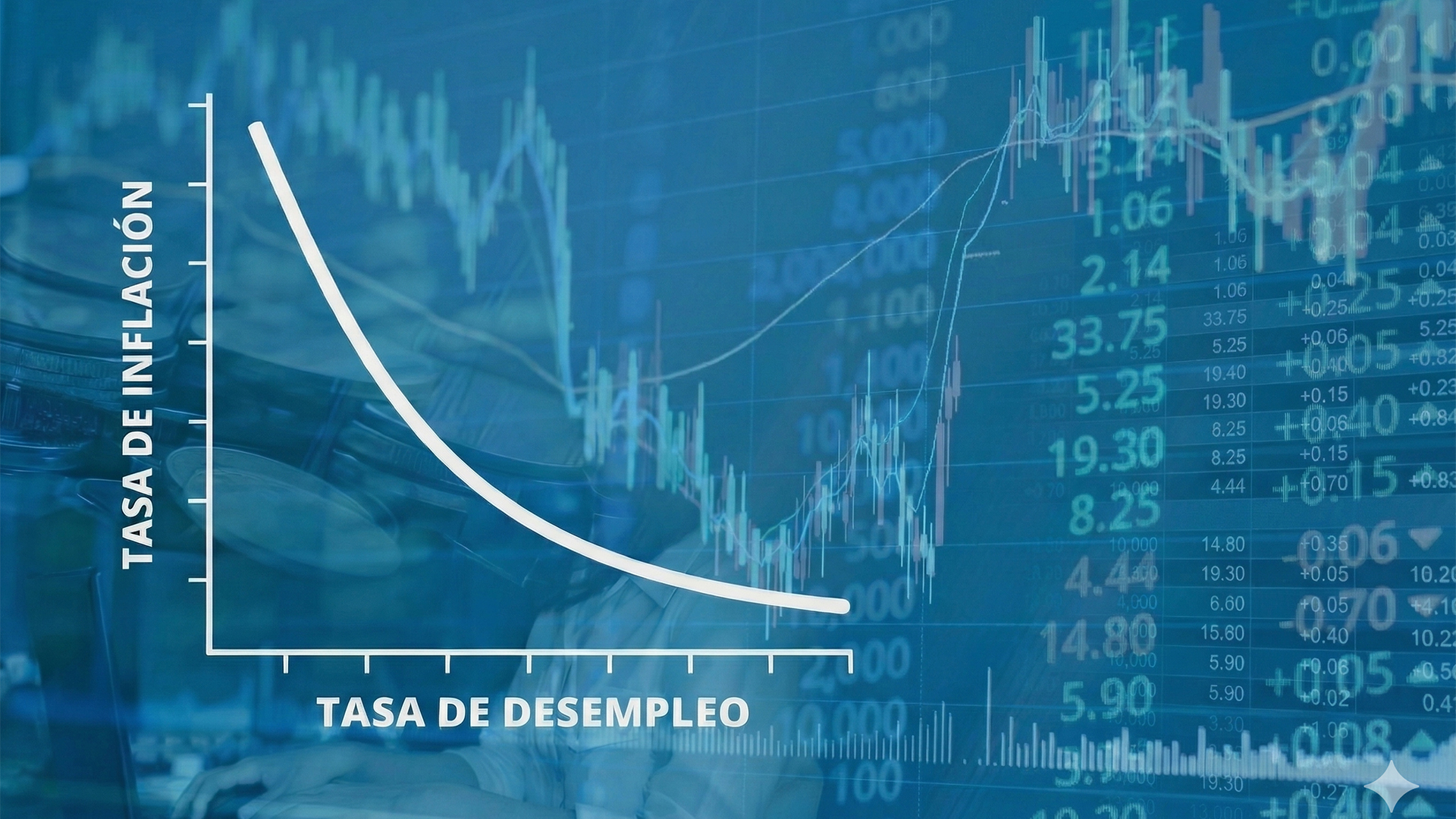
This paper empirically assesses the concern on whether the slope of the Phillips curve with respect to the output gap has decreased (i.e. the Phillips curve has “flattened”). We derive a generalized lag-augmented version of the New-Keynesian Phillips Curve for a small open economy (Galí and Monacelli, 2005) in order to specify a semi-structural estimation equation. For the Peruvian economy, such equation is estimated via the Generalized Method of Moments for the Inflation-Targeting regime (January 2002 - March 2019) and the post-crisis (January 2008 - March 2019) periods. We found that the slope parameter has remained stable for both estimation periods. Moreover, the expectation channel has gained more relevance for the post-crisis period, a result that is consistent with a lower persistence of inflation dynamics. Our results are also consistent with the presence of long run nominal homogeneity across estimation samples.

Ver más

Liquidity Regulation in a Monetary Economy.

A market failure that justifies liquidity regulation lies on the incompleteness of financial markets when there is risk about the aggregate distribution of transaction types. I develop a framework in which outside (fiat, government-provided) and inside (plastic, bank-created) money co-exist as means of payment under either complete or incomplete financial markets for aggregate risk. The welfare analysis is reduced to comparing only two parameters: the currency-to-liability ratio ? which is set by the government and the fraction ? of banks’ depositors engaged in cash-only transactions (inside money cannot be accepted). In equilibrium, when ? < ? fiat currency is relatively scarce in the inter-bank market and then government bonds (which are transformed into liquid liabilities by banks) are less valuable than cash. This forces banks to offer higher consumption with plastic money to induce self-selection among depositors. Welfare is lower under incomplete markets: depositors exert a higher labor effort (precautionary motive) to accumulate more assets as perfect risk-sharing is unattainable (unlike the case of complete markets). Also, a higher cash requirement on banks is equivalent to an implicit increase in the policy parameter ? which makes bonds scarcer and more valuable in the inter-bank market. Therefore, a liquidity requirement is not welfare-improving because it reduces the likelihood of bank runs but because it increases the inter-bank market price of bonds which in turn improves risk-sharing. Finally, when the government sets ? = ? the welfare measures under complete and incomplete markets coincide as the Friedman rule holds.

Ver más