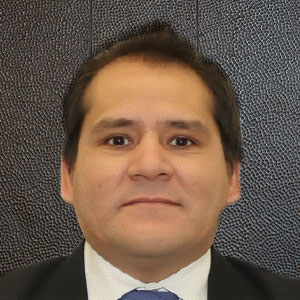
Nikita Céspedes

Nikita Céspedes
Nikita Céspedes
Especialista en Investigación Económica

Estudios realizados

Bachiller en Economía

Pontificia Universidad Católica del Perú (Perú)
2000.

Doctorado en Economía

University of Rochester (Estados Unidos)
2011.

Areas of interest

  • Investment and Capital
  • Informal and Underground Economy
  • Business Fluctuations and Cycles
  • Turnover, Vacancies, and Layoffs
  • Unemployment

Keywords

  • economic growth
  • unemployment
  • inequality
  • informal economy
  • labor supply

Perfiles académicos:

Nikita Céspedes holds a PhD in Economics from the University of Rochester. He speciales in labor economics, macroeconomics, and economic development, with teaching experience in macroeconomics and research methodology.

Main Publications

A Quantitative General Equilibrium Approach to Migration, Remittances and Brain Drain

Developing countries have experienced an outstanding outflow of skilled workers (brain- drain) over the last several decades. Additionally, migrants tend to be tied to their country of birth, since they send a large amount of remittances to their relatives. Furthermore, migration is not permanent, since a considerable number of workers return to their country of birth after a migration spell. In this paper we develop a model that is consistent with these facts. We use our model to address some important issues in the migration literature from a theoretical perspective. We study the general equilibrium effects of migration, its long-term effects, and its welfare effects, and we see whether the joint effect of return migration and remittances is strong enough to offset the effects of skilled migration. Finally, we evaluate the effectiveness of policy interventions that attempts to offset the effects of a brain drain.

Ver más


Job Cretaion and Destruction and the Informal Sector

This paper analyses the employment creation and destruction rates in Lima Metropolitan Area. This work is relevant because there is no literature about these indicators for developing economies with high levels of informality. We find that these indicators are on average similar to those found for developed economies; however the corresponding values for the informal sector are three times larger than those for the formal sector. There is an important heterogeneity of both series, creation and destruction rates, according to some covariates; additionally, these two variables are related to the business cycle: the destruction rate is countercyclical and the creation rate is procyclical, being this cyclicality larger in the formal sector.

Ver más
Publications