Paul Castillo B.

Paul Castillo B.
Paul Castillo B.
Gerente General

Estudios realizados

Bachiller en Ingeniería Económica

Universidad Nacional de Ingeniería (Perú)
1995.

Maestría en Economía (M.Sc.)

London School of Economics and Political Science (Reino Unido)
2001.

Doctorado en Economía

London School of Economics and Political Science (Reino Unido)
2007.

Areas of interest

  • Macroeconomics and Monetary Economics
  • Money and Interest Rates
  • Monetary Systems
  • Financial Markets

Keywords

  • monetary shocks
  • dollarization
  • transmission mechanism
  • monetary policy
  • natural interest rate

Perfiles académicos:

Paul Castillo holds a PhD in Economics from the London School of Economics and Political Science. His research focuses on monetary policy in emerging economies, the effects of dollarization, and, more recently, the impact of macroprudential regulatory instruments on credit cycles and the development of digital payments. He has published in the Journal of International Money and Finance, Journal of Macroeconomics, Empirical Economics, Economic Modelling, Journal of Applied Economics, Economía, Open Economy Review, Estudios Económicos (BCRP), and Economía Chilena (Central Bank of Chile). He currently serves as General Manager of the BCRP.

Main Publications

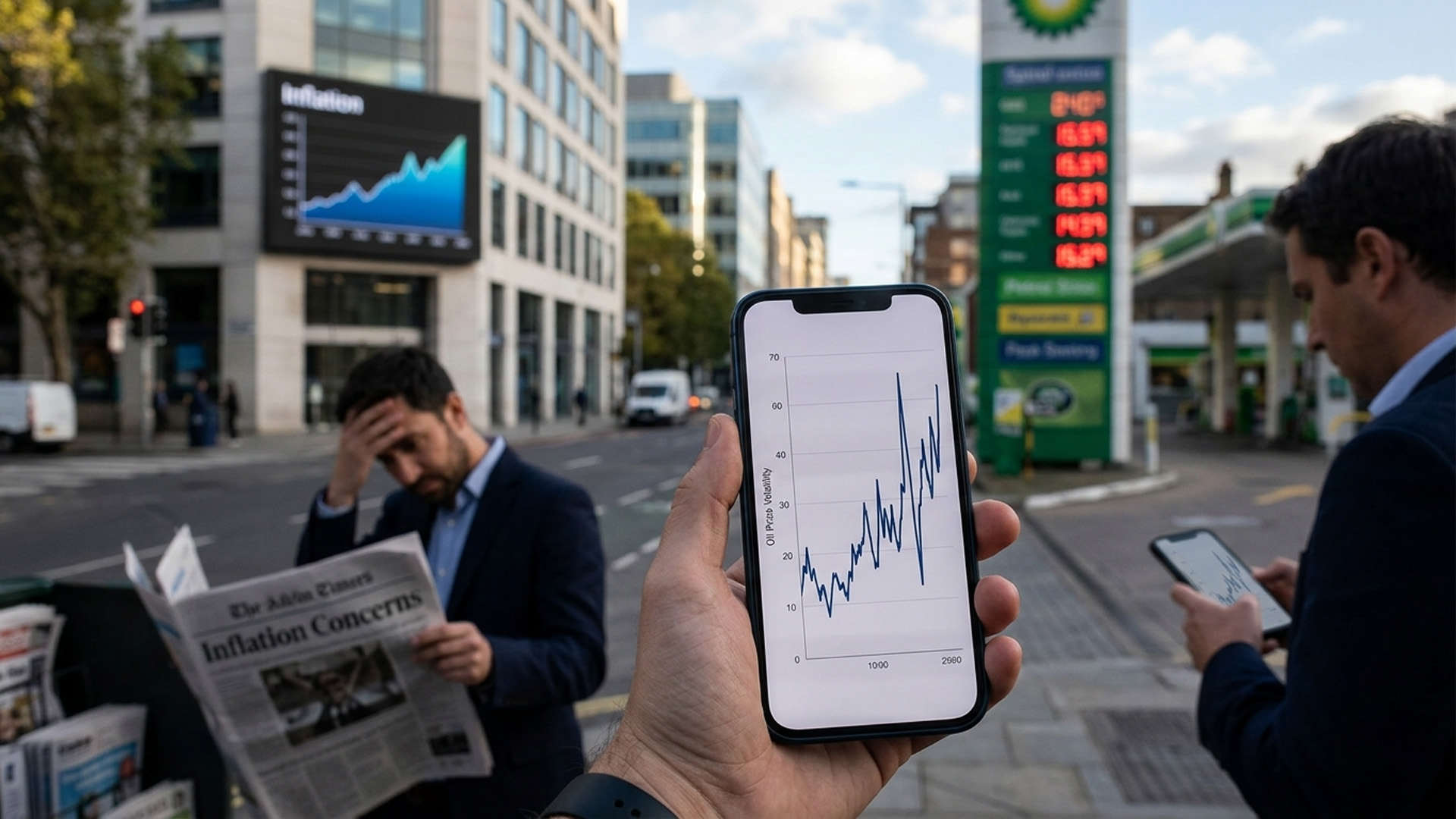
Inflation, Oil Price Volatility and Monetary Policy

In a fully micro-founded New Keynesian framework, we characterize analytically the relation between average inflation and oil price volatility by solving the rational expectations equilibrium of the model up to second order of accuracy. Higher oil price volatility induces higher levels of average inflation. We also show that when oil has low substitutability and the central bank responds to output fluctuations, oil price volatility matters for the level of average inflation. The model shows that when oil price volatility increases, average inflation increases whereas average output falls: this implies a trade-off also between average inflation and that of output. The analytical solution further indicates that for a given level of oil price volatility, average inflation is higher when marginal costs are convex in oil prices, the Phillips Curve is convex, and the degree of relative price dispersion is also higher. We perform a numerical exercise showing that the model with a empirically plausible Taylor rule can replicate the level of average inflation observed in the U.S. in 2000s.

Ver más


Foreign Exchange Intervention, Capital Flows, and Liability Dollarization.

This paper investigates the importance of foreign exchange intervention in dealing with shocks to global capital flows in emerging economies. We show in a VAR analysis that a shock to global capital flows has a sizable effect on economic activity, and this effect is amplified in emerging economies with liability dollarization. However, countries that systematically rely on sterilized foreign exchange intervention in response to movements in global capital flows, display lower output and real exchange rate volatility. Motivated by the empirical evidence, we develop a small open economy model with liability dollarization and balance sheets effects calibrated to an emerging economy. Our quantitative results show that liability dollarization amplifies the effects of fluctuations in capital flows and that foreign exchange intervention can reduce macroeconomic volatility and improve welfare. These results point to the importance of foreign exchange reserves in insulating emerging economies from the global financial cycle.

Ver más
Publications