Marco Vega

Marco Vega
Marco Vega
Subgerente de Investigación Económica

Estudios realizados

Bachiller en Economía

Universidad Nacional de Ingeniería (Perú)
1992.

Maestría en Economía (M.Sc.)

London School of Economics and Political Science (Reino Unido)
1998.

Doctorado en Economía

London School of Economics and Political Science (Reino Unido)
2007.

Areas of interest

  • Prices, Business Fluctuations, and Cycles
  • Business Fluctuations and Cycles
  • Money and Interest Rates
  • Monetary Policy and Central Banking
  • Macroeconomic Policy and Public Finance
  • Open Economy Macroeconomics

Keywords

  • forecasting
  • explicit inflation targeting
  • monetary policy
  • foreign exchange rate regime

Perfiles académicos:

Marco Vega holds a PhD in Economics from the London School of Economics and Political Science. His research focuses on macroeconomics and monetary policy, with expertise in inflation, exchange rates, monetary policy communication, macroeconomic forecasting, and macroeconomic modeling.

Main Publications

The Dynamics of Investment Projects: Evidence from Peru

We analyse the effect of commodity price cycles on firm investment decisions at the project level, by considering the decision to delay, cancel or complete a project as initially announced. In particular, we use logit and duration models of competing risks on a novel dataset of announced investment projects in Peru from different economic sectors. The empirical framework for the timing of investment is motivated by real option models for projects that take time to build, with commodity prices used as a proxy of expected future income and their volatility as a proxy for uncertainty. Our results suggest that both a reduction in commodity prices and an increase in volatility increase the probability to delay investment in the mining sector, with an amplification effect when both simultaneously occur. In other sectors, delays in implementation occur more often in periods of high volatility. Probability regressions under a competing risk framework suggest that higher commodity prices lead to a higher probability of completion in all sectors of the economy.

Ver más


Monetary and Fiscal History of Peru 1960-2010: Radical Policy Experiments, Inflation and Stabilization

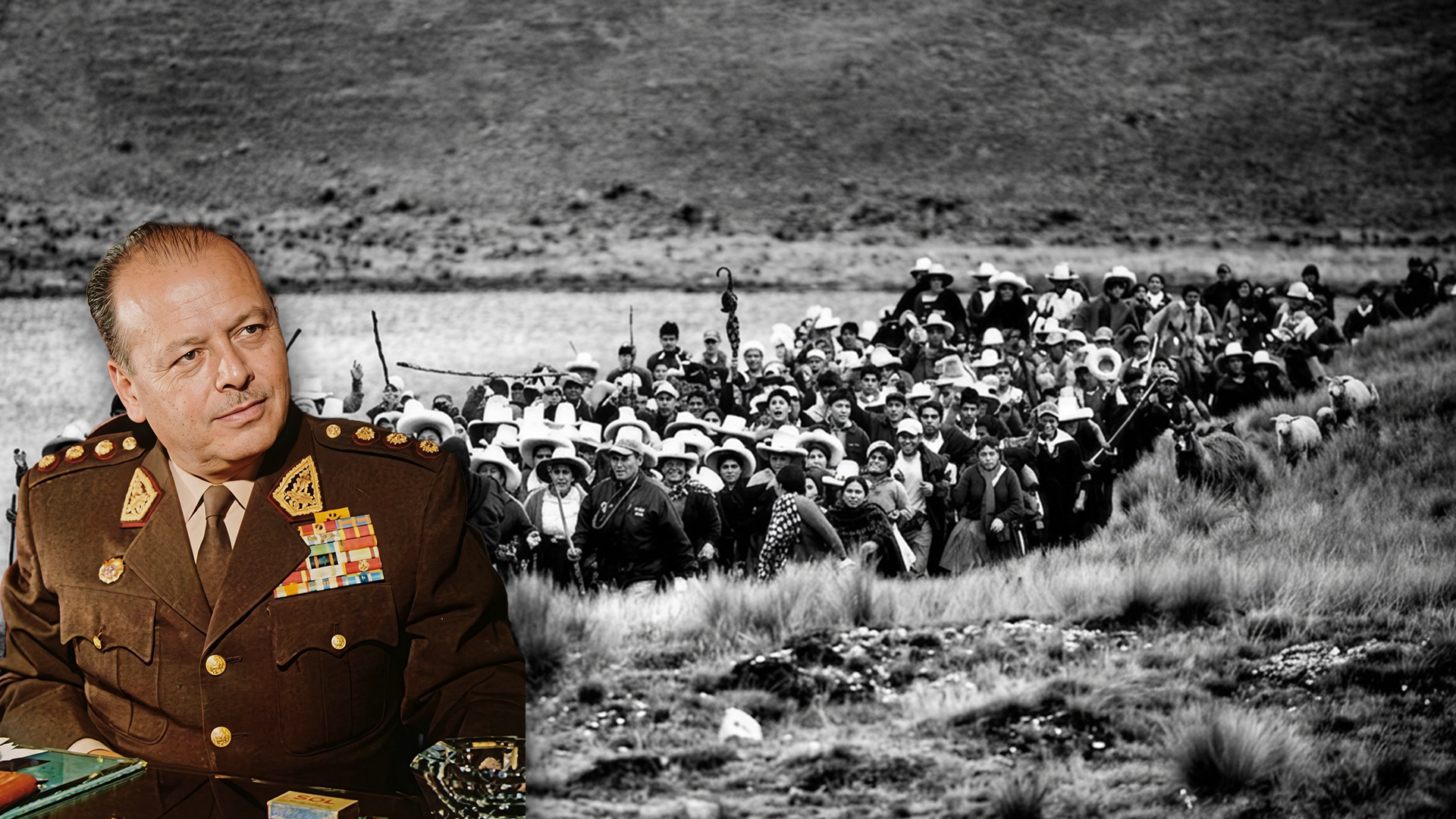
We show Peru's experience of chronic inflation through the 1970s and 1980s resulted from inflationary taxation in a regime of fiscal dominance of monetary policy. Hyperinflation occurred when further debt accumulation became unavailable, and a populist administration engaged in a counterproductive policy of price controls and loose credit. We interpret the fiscal difficulties preceding the stabilization as a process of social learning to live within the realities of fiscal budget balance. The credibility of policy regime change in the 1990s may be linked ultimately to the change in public opinion giving proper incentives to politicians, after the traumatic consequences of the hyper stagflation of 1987-1990.

Ver más
Publications

No hay publicaciones disponibles